5 Proven Ways to Increase Student Participation in Campus Recycling Programs
Education alone won't boost campus recycling rates. These five proven strategies—gamification, real-time verification, convenience, social influence, and data transparency—transform participation by removing friction and adding motivation.
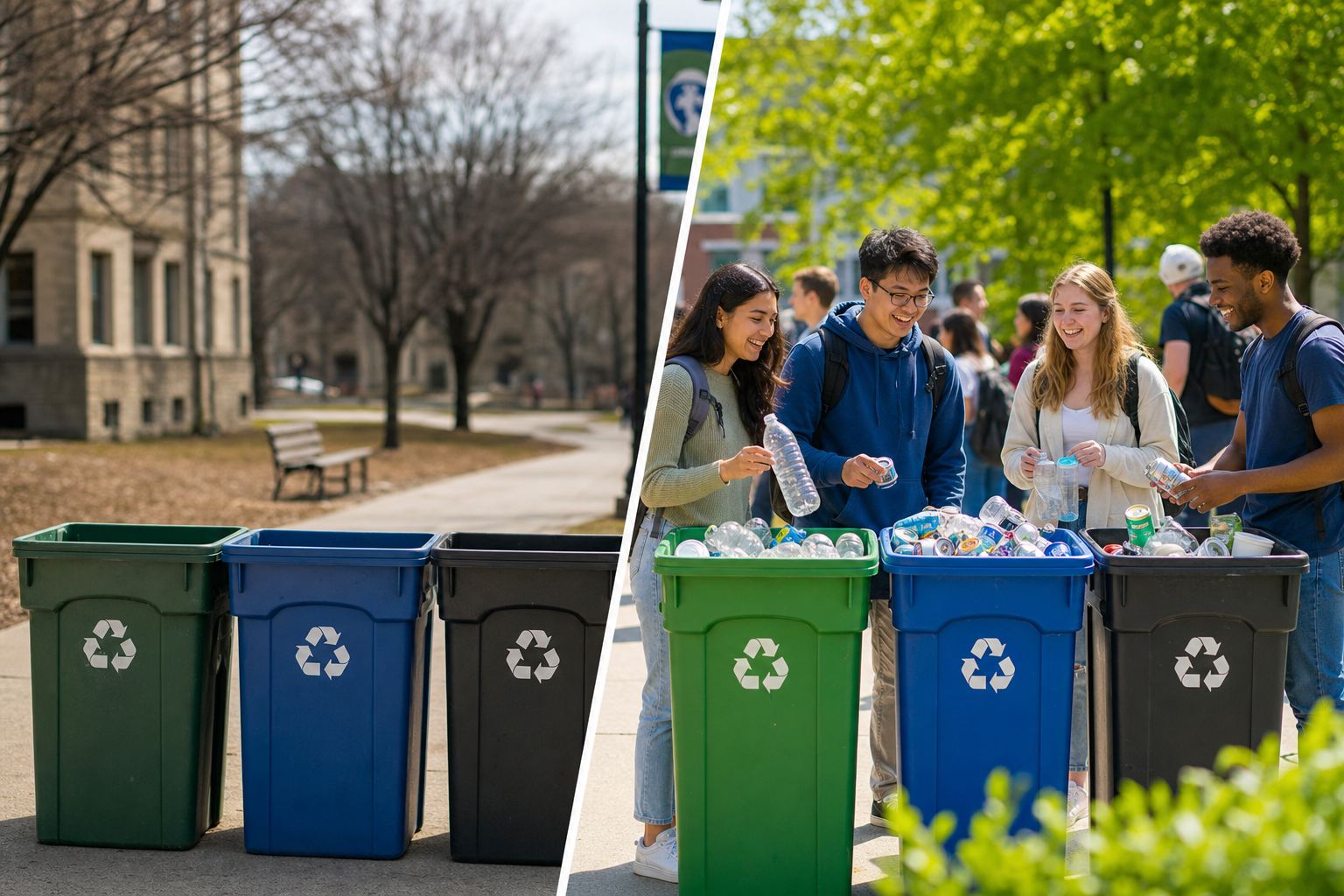
By Genesis 1 Technologies · Published 2026-06-01T08:10:30.000-04:00
You've placed recycling bins across campus. You've sent emails, posted signage, and maybe even hosted a sustainability fair. But participation rates remain stubbornly low.
You're not alone. Campus recycling programs nationwide struggle with the same challenge: how do you motivate students—already overwhelmed with classes, social pressures, and limited time—to care about which bin their waste goes into?
The answer isn't more education. Students already know recycling is important. The answer is removing friction and adding motivation.
Here are five proven strategies to transform campus recycling participation.
1. Make It Instantly Rewarding with Gamification
- The Problem: Recycling feels like a chore with no immediate payoff. The benefits (environmental preservation) are abstract and distant.
- The Solution: Create immediate, tangible rewards for correct recycling behavior.
- How It Works:
- Students earn points every time they recycle correctly
- Points can be redeemed for campus perks: dining credits, bookstore discounts, event tickets, or even priority parking
- Leaderboards foster friendly competition between dorms, Greek organizations, or academic departments
Real Results: Universities using gamified recycling platforms like tsRewards report participation increases of 200-300%. When recycling becomes a game, students engage.
- Implementation Tips:
- Partner with campus dining, bookstores, and activities offices for reward inventory
- Publicize leaderboards in high-traffic areas and student newsletters
- Celebrate top recyclers at semester-end events
2. Eliminate Guesswork with Real-Time Verification
- The Problem: Students want to recycle correctly, but they're often unsure. Is this plastic container recyclable? What about this greasy pizza box? Rather than risk making a mistake, many students default to the trash.
- The Solution: Technology that tells students—in real-time—whether an item is recyclable.
- How It Works:
- Smart recycling stations use AI and sensors to scan items before disposal
- The system provides instant feedback: "Yes, this is recyclable" or "No, this goes in the trash"
- Students learn the rules through doing, not memorizing guidelines
Real Results: Campuses using AI verification systems like Topper Stopper see contamination rates drop from 25% to near-zero. When students know their item will be accepted, they're more likely to participate.
- Implementation Tips:
- Place smart stations in high-traffic areas: dining halls, student unions, dormitories
- Use data from verification systems to identify common confusion points
- Supplement technology with simple signage that reinforces what students learn
3. Meet Students Where They Are: Convenience and Visibility
- The Problem: Recycling bins are often inconveniently located, poorly marked, or visually unappealing. Students make split-second decisions—if the recycling bin isn't immediately obvious and accessible, the trash wins.
- The Solution: Audit your bin placement and make recycling the path of least resistance.
- How It Works:
- Conduct a walk-through of high-traffic areas and note where students generate waste
- Ensure recycling bins are placed alongside every trash bin—never alone
- Use consistent, bold signage that's visible from a distance
- Choose bins with clear openings that show what goes inside
- Implementation Tips:
- Place bins at "decision points": exits of dining halls, near vending machines, at building entrances
- Use color coding consistently across campus (e.g., blue for recycling, black for trash)
- Empty bins before they overflow—nothing discourages recycling like a full bin
4. Tap Into Social Influence and Peer Pressure
- The Problem: Recycling can feel like an individual action with no social reinforcement. If students don't see their peers recycling, they may assume it's not a priority.
- The Solution: Make recycling visible, social, and normative.
- How It Works:
- Display real-time recycling data in public spaces ("This week, [Dorm Name] recycled 500 lbs—beat them next week!")
- Host recycling challenges between residence halls or student organizations
- Recognize top recyclers publicly through social media shoutouts, awards, or incentives
- Train student ambassadors to model correct recycling behavior
- Implementation Tips:
- Partner with student government and RAs to promote recycling in their communities
- Create "green certification" for student organizations that meet recycling targets
- Use social media to highlight recycling wins, not just sustainability messaging
5. Close the Feedback Loop with Data and Transparency
- The Problem: Students never see the results of their recycling efforts. Without feedback, it's hard to stay motivated.
- The Solution: Show students the impact of their participation.
- How It Works:
- Share monthly or weekly recycling metrics: tons diverted, contamination rates, revenue generated
- Communicate progress toward sustainability goals: "We're 75% of the way to our diversion target"
- Highlight specific wins: "Recycling from Smith Hall generated $500 in revenue this month"
- Celebrate milestones with campus-wide announcements
- Implementation Tips:
- Include recycling updates in student newsletters and social media
- Create a dashboard or kiosk in the student union showing real-time data
- Tie recycling metrics to campus sustainability reports and ESG disclosures
Putting It All Together: A Systems Approach
No single strategy will transform participation on its own. The most successful campus recycling programs combine:
- Motivation: Gamification, rewards, and recognition
- Clarity: Real-time verification and clear signage
- Convenience: Strategic bin placement and maintenance
- Social Proof: Peer influence and public commitment
- Feedback: Data transparency and progress updates
When these elements work together, recycling shifts from a chore to a habit—from a requirement to a source of pride.
The Bottom Line
Increasing student participation in campus recycling isn't about education. Students already know they should recycle. The challenge is making it easy, rewarding, and socially reinforced.
Invest in systems that remove friction and add motivation. The result won't just be higher participation rates—it will be a campus culture where sustainability is the default, not the exception.
---
Next Step: Ready to transform your campus recycling program? [Contact Genesis 1 Technologies](/contact/) to learn how AI verification and gamified rewards can increase participation at your institution.